
Can’t find your vane?We’ll make it to measure.
Custom vacuum pump vanes, even if your equipment is discontinued or nobody knows where it came from. Measure your old vane and we’ll make it in Barcelona.
Don’t have the vane? Take the measurements from the rotor
- Discontinued equipmentIf the manufacturer no longer makes it, we do
- No part number or nameplateWe work from your old vane, its dimensions or a drawing
- Unknown originWe’ve solved those cases too
- Kits in 43 countriesMade in Barcelona, from 4 units
If the manufacturer no longer makes it, we do. If nobody knows where your equipment came from, we still do.
Your vane isn’t lost.We just need its measurements.
We’ve made vanes for discontinued equipment, for machines with no part number and even for machines of unknown origin, and today they run normally. You don’t need to know the name of the spare part: information about the machine is enough for us to start the assessment.
How to measure your vane with a caliper
Length
From end to end, with the caliper jaws sitting squarely against both ends.
Width
From edge to edge, at right angles to the length.
Thickness
At several points: a worn vane may no longer match its nominal size.
Give the dimensions in millimetres. You must tell us whether the pump is dry-running (oil-free) or oil-lubricated so we can check compatibility. The number of vanes in the rotor also helps.
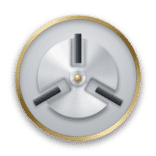
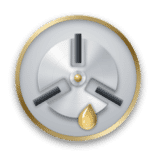
Don’t have the vane?Measure the rotor.
If the vane has broken, gone missing or you never had it, the rotor slots still hold its dimensions. A caliper is all you need, whether the rotor has a shaft, a hub, or is short with a large diameter.
Slot length
This is the vane’s length. Measure it from one face of the rotor to the other with the large outside jaws.
Slot width
This is the vane’s thickness. Insert the small inside jaws and open them until they touch both walls.
Slot depth
This is the vane’s width. Rest the end of the caliper beside the slot and lower the depth rod to the bottom. If the slot is angled, follow its angle.
Diameter and number of slots
Measure the rotor diameter and count the slots. If you can, also measure the inside diameter of the cylinder and send us a photo of the rotor.
Your vane, made to measure
From those dimensions, we make your vane in carbon graphite, G11++ or Kevlar. We check the fit before manufacturing.
The rotor’s dimensions are the reference: with worn rotors or angled slots, we check every dimension with you before manufacturing.
We identify what you need
Send us the brand, model, previous part number and the dimensions of each vane, if you have them. You can attach photos, a drawing or a sample.
We review the application
Our team checks dimensions, bevels, material, operating conditions and quantity. See our technical verification criteria.
We prepare your proposal
We outline feasibility, proposed material, quantity, price and estimated lead time, all subject to technical confirmation.
They’d run out of vanes.Today they’re back to normal.
We’ve made vanes for many machines that had no spare available, and delivered them wherever they were. Those machines are working normally, and many customers have already come back to us for another set of vanes.
- No vanesThe manufacturer no longer makes them, or nobody knows the part number.
- RunningWe measure, manufacture and deliver them to you. The equipment is back at work.
- And they come backMany customers reorder their vane sets from us.
- 4unitsMinimum manufacturing order
- 800mmMaximum length in G11++ and Kevlar; up to 400 mm in carbon graphite. Beyond that, ask us.
- 8mmMaximum thickness in all three materials. Beyond that, ask us.
- BarcelonaWhere we make and machine your vanes
The making ofyour custom vane.
Every vacuum pump or compressor needs a geometry suited to its rotor and its working conditions. We treat every vane as a technical component.
Material to suit the application
We select carbon graphite, G11++ fibre or other composites according to the design and lubrication.
Dimensions and tolerances
We check length, width, thickness, flatness and fit against the original part number, a sample or a drawing.
Bevels, edges and grooves
We mill profiles, edges and grooves only where the original geometry and the application call for them.
Polishing and surface finish
We aim for uniform surfaces and a fine polish, up to a mirror finish where technically appropriate.
Edge marking
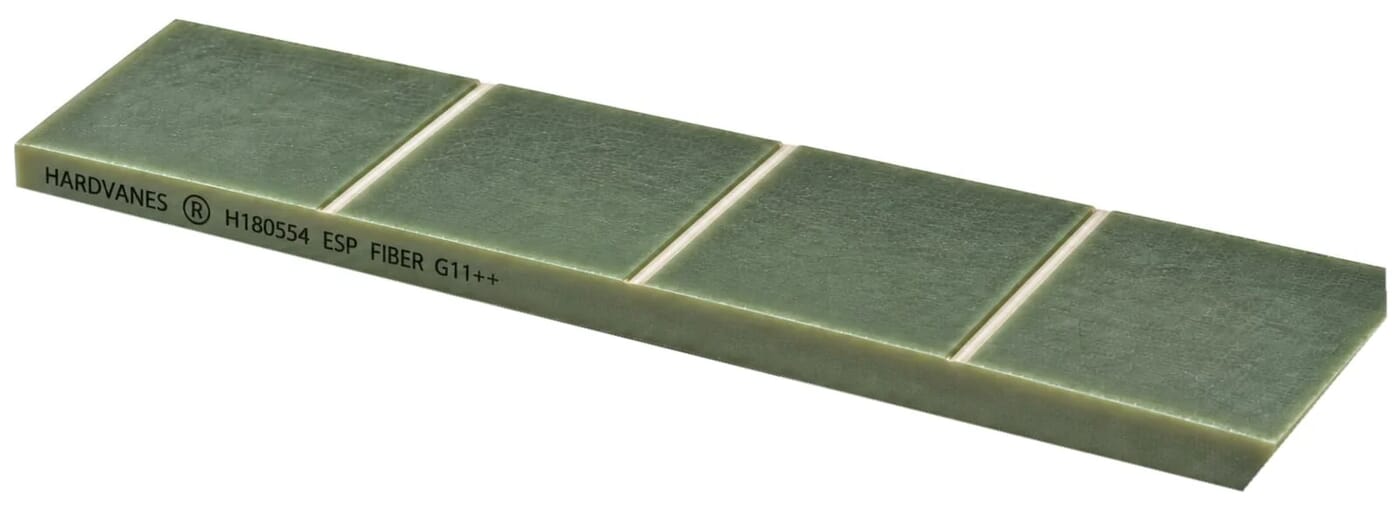
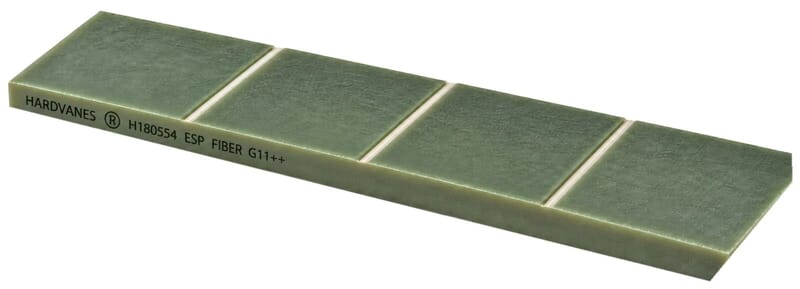
As on this G11++ H180554: brand, reference and material engraved on the edge.
Design yours
Indicative 3D visualisation of the HARDVANES® H180554 G11++ fibre vane, 180 × 55 × 4 mm, with three grooves. Geometry and finish are verified before manufacturing.
More on machining, bevels and finishes
Choosing the right material isn’t enough. The geometry and finish of each vane affect how it fits inside the rotor. We work out the operations needed to reproduce the part’s functional characteristics.
Custom-machined graphite vanes
Carbon graphite vanes for vacuum pumps and compressors are assessed on their dimensions, tolerances and operating conditions. Machining lets us adapt lengths, thicknesses, profiles and edges in compact or large formats, always to each machine’s technical specifications.
Precision grooves and bevels
Technical milling defines transverse grooves, bevels, profiles and the specific details of each vane or blade. We keep to the position and orientation set out in the original design, without adding grooves or changing the geometry for looks. We also check flatness, parallelism and edge finish.
Fine polishing and mirror surfaces
Polishing aims to minimize machining marks and produce even surfaces. Where the composite allows, we consider a high-gloss or mirror finish. Appearance never replaces the requirements for roughness, dimensional accuracy or a vane’s compatibility with its vacuum pump.
Need custom graphite vanes, blades or carbon vanes for a discontinued vacuum pump or an industrial compressor? Send us the model, the dimensions and photos or CAD drawings. HARDVANES® will review the material, geometry and finish before confirming manufacturing feasibility. If you’re looking for a part that’s already available, see our vane catalog by brand; to learn about the material and how to choose it, visit HARDVANES® vane technology.
The materialmakes the difference.
Carbon graphite, G11++ fibre or Kevlar: the design of the vacuum pump or compressor, its lubrication and its working conditions determine the choice.
Carbon graphite
For compatible dry-running equipment. Grade and geometry subject to technical review.
HARDVANES® EKVAC EVO+ · German-origin graphite
Up to 400 mm long and 8 mm thick
G11++ technical fibre
A specific composite for certain lubricated pumps and mechanical requirements.
Reference H180554 · 180 × 55 × 4 mm
Up to 800 mm long and 8 mm thick
Kevlar
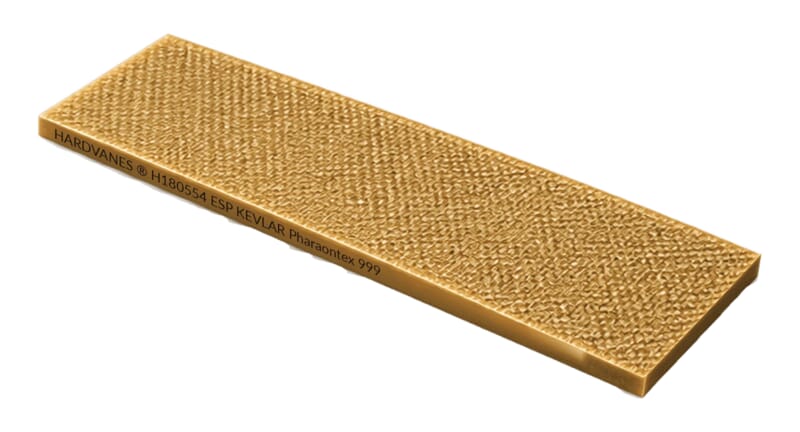
Pharaontex 999 composite for compatible vacuum pumps and compressors, subject to technical review.
Reference H180554 ESP · no grooves
Up to 800 mm long and 8 mm thick
Technical data
Typical material values, for reference. Compatibility with your equipment is always confirmed in the technical review.
| Flexural strengthperpendicular to laminations, at 20 °C | 340 MPa |
|---|---|
| Flexural modulus | 24,000 MPa |
| Tensile strength | 300 MPa |
| Compressive strengthperpendicular to laminations | 350 MPa |
| Charpy impact strengthparallel to laminations | 33 kJ/m² |
| Cleavage strengthparallel to laminations | 30 MPa |
| Density | 1.7–2 g/cm³ |
| Temperature indexby grade: G-11/155, G-11/180 or G-11/220 | 155–220 °C |
| Water absorption3 mm thick test specimen | 22 mg |
| Maximum lengthbeyond that, ask us | 800 mm |
| Maximum thicknessbeyond that, ask us | 8 mm |
| DensityASTM D792 | 1.3 g/cm³ |
|---|---|
| Flexural strengthlengthwise / crosswise, ASTM D790 | 139 / 125 MPa |
| Flexural strengthat 200 °C, lengthwise / crosswise | 102 / 80 MPa |
| Tensile strengthlengthwise / crosswise, ASTM D638 | 106 / 73 MPa |
| Glass transition temperature (Tg) | 162 °C |
| Linear thermal expansionin-plane, depending on direction, ASTM E831 | 6.2–12.6 µm/m·°C |
| Maximum lengthbeyond that, ask us | 800 mm |
| Maximum thicknessbeyond that, ask us | 8 mm |
Phenolic resins
Reinforced materials for compatible applications, subject to technical assessment.
Special geometries
We assess other fibres, bevels, grooves and formats to suit the equipment’s needs.
Every geometryhas a purpose.
Four references, six views. Different solutions for your application.
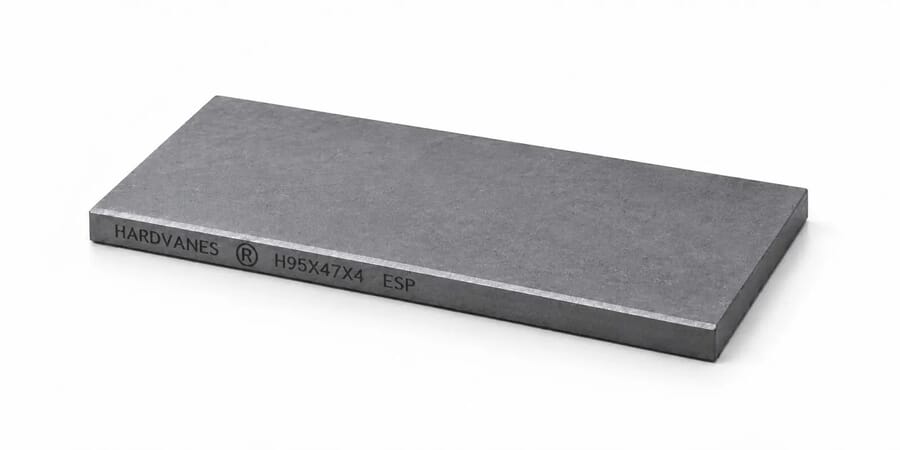
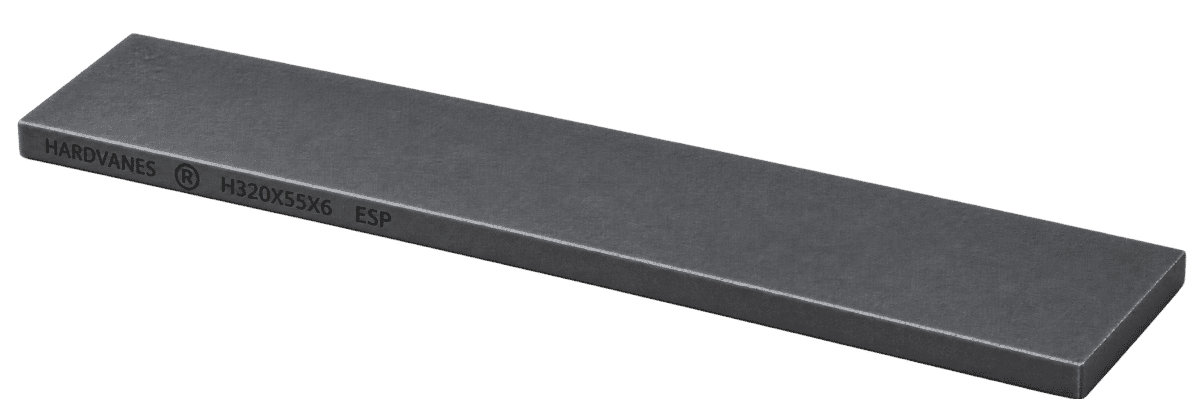
Compact graphite
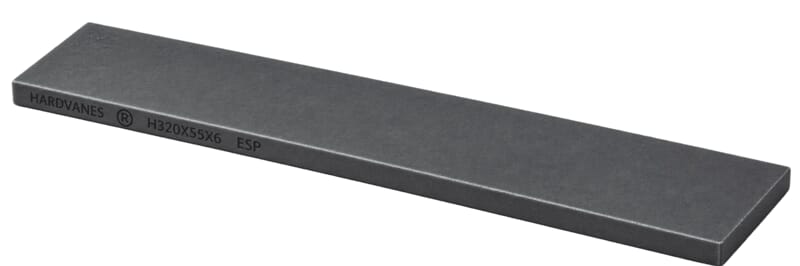
95 × 47 × 4 mm · carbon graphite
Single vane with a fine bevel and a polished surface finish. Material and application subject to assessment.
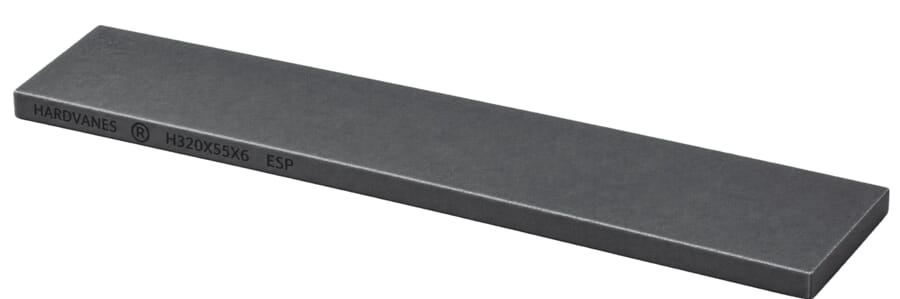
Large-format graphite
320 × 55 × 6 mm · carbon graphite
With a bevelled edge. In carbon graphite, up to 400 mm long and 8 mm thick; beyond that, ask us.
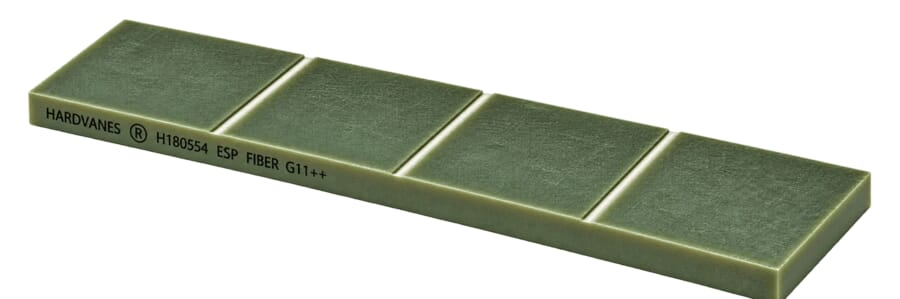
G11++ with grooves
180 × 55 × 4 mm · G11++ epoxy fibre
Two-, three-, four- or five-groove configurations to suit the equipment. Shown here with three transverse grooves on the broad face.
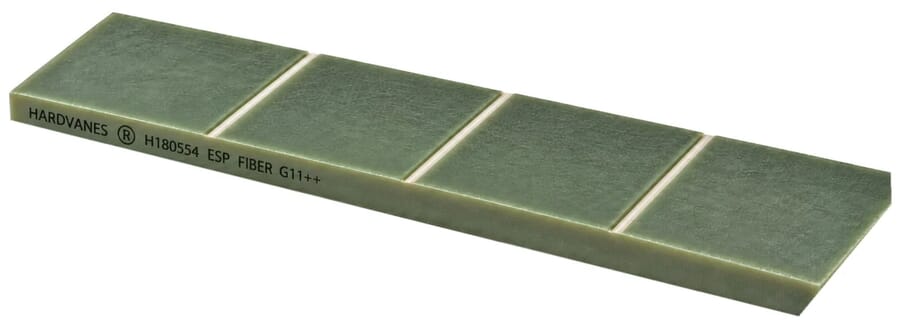
Machined G11++
H180554 · edge marking
Additional view showing three grooves on the broad face and the edge marking. Geometry subject to technical review.
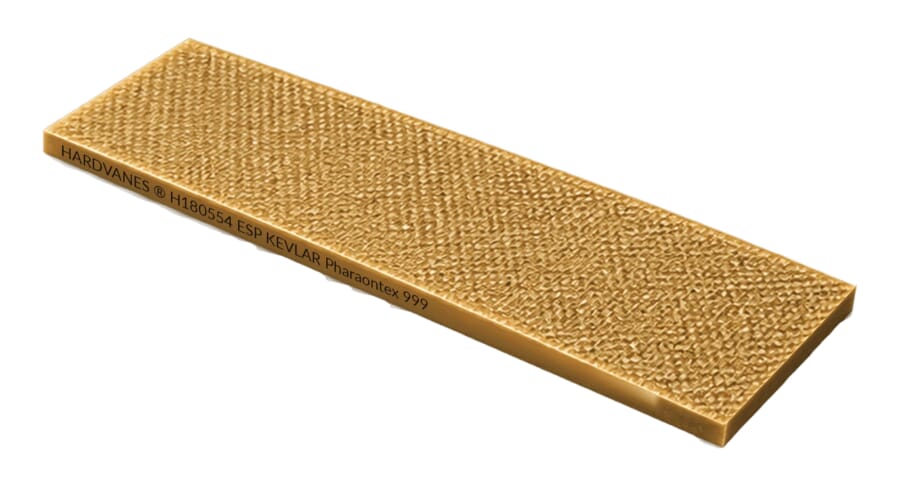
Compact Kevlar
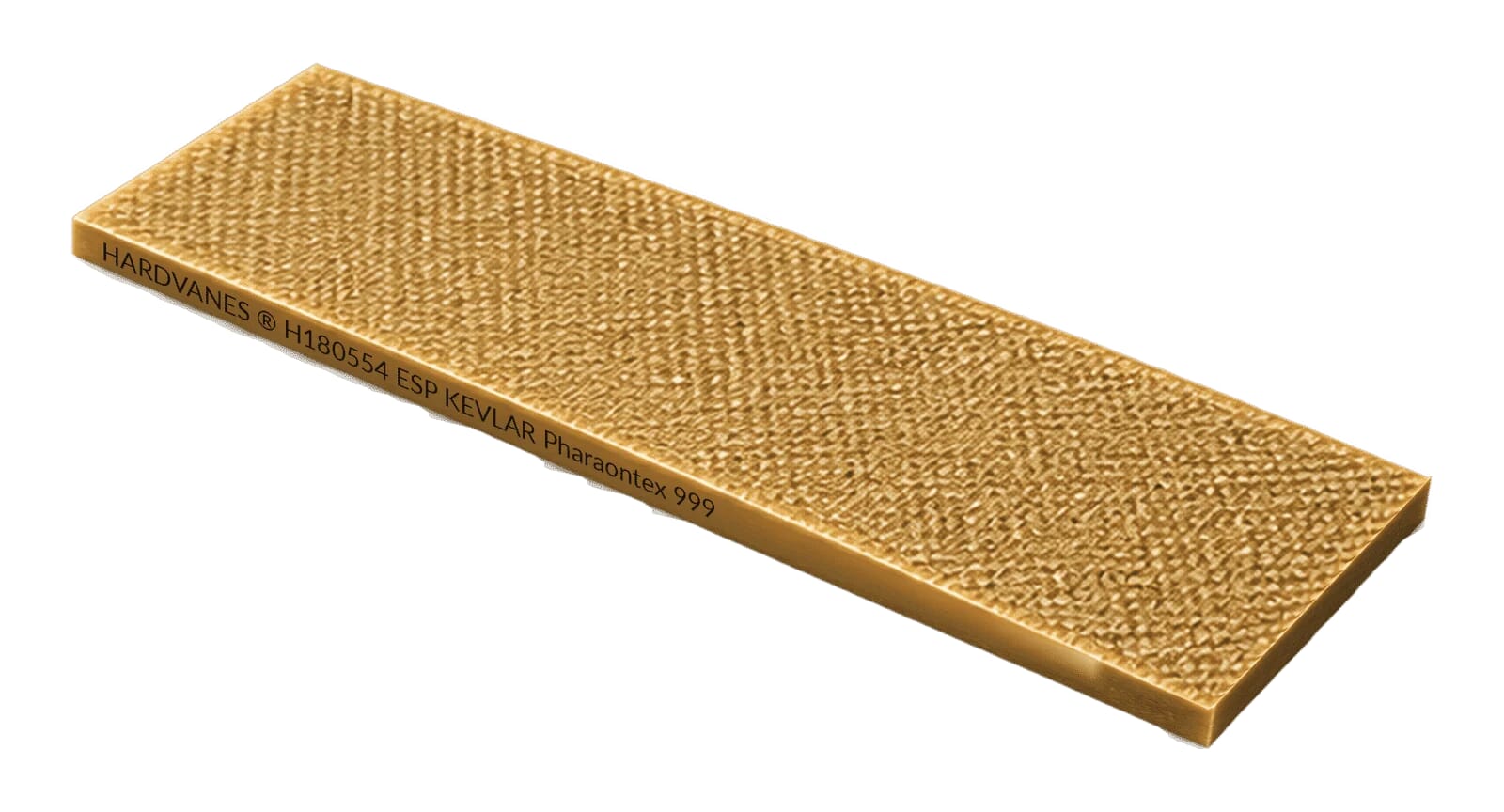
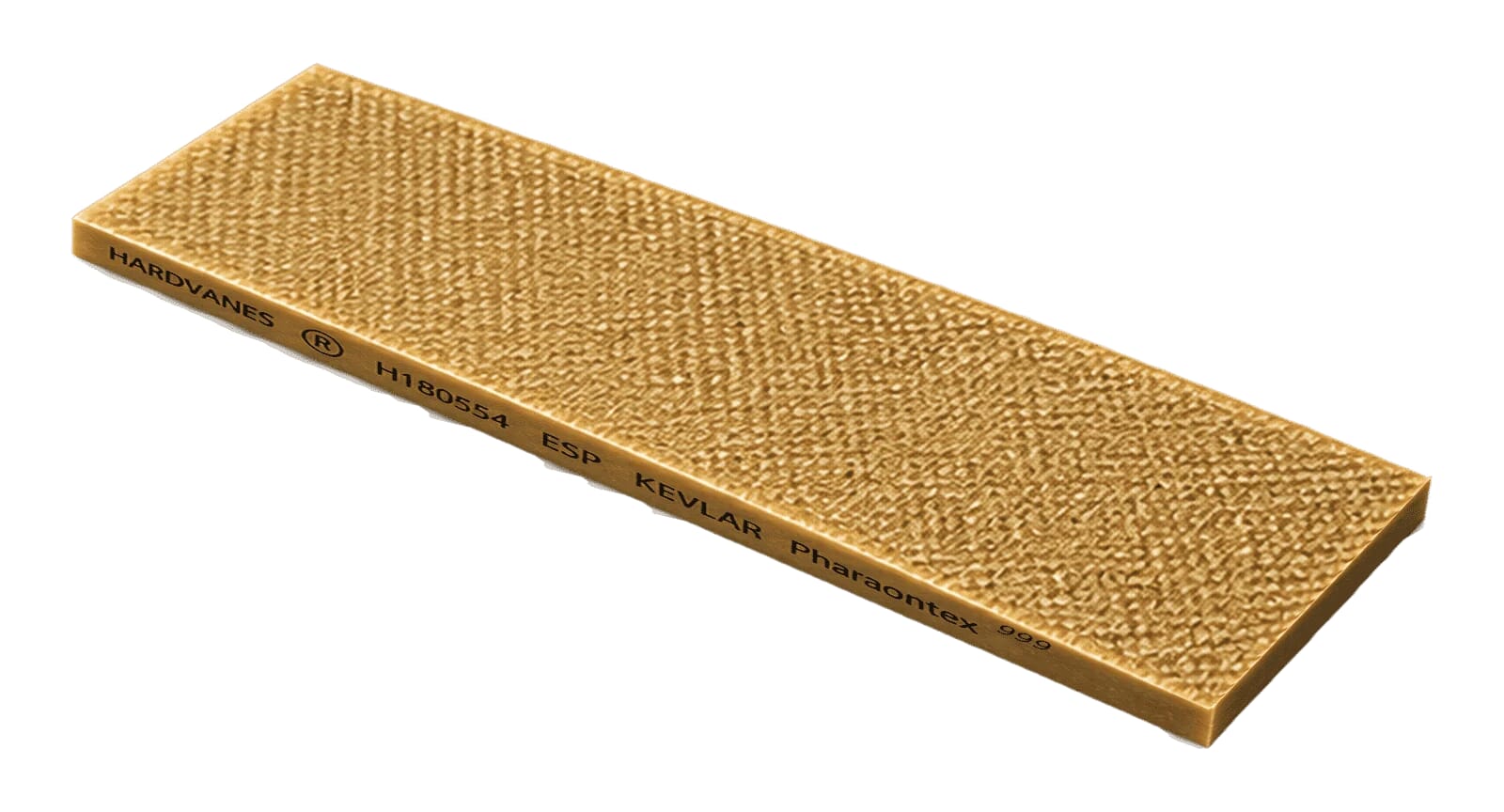
H180554 ESP · Pharaontex 999
No grooves. A specific composite for vacuum pumps or compressors.
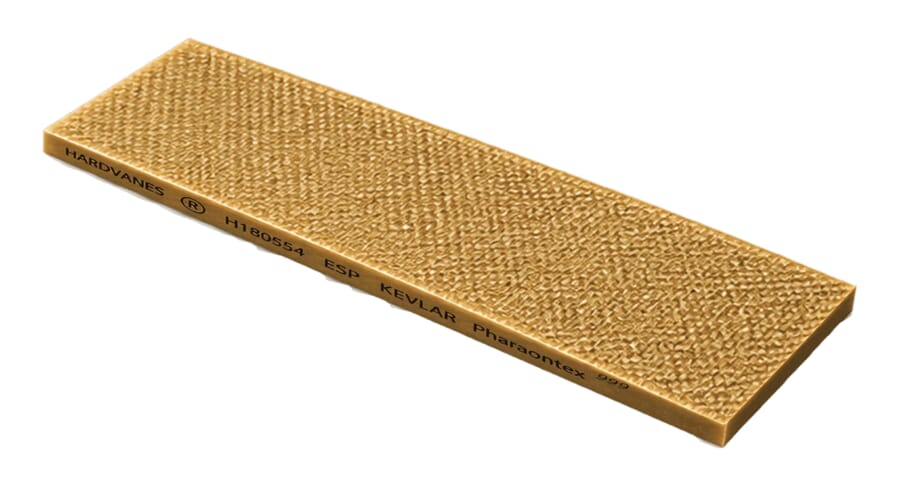
Thin-profile Kevlar
4 mm thick · edge marking
The broad face is smooth, with no grooves; the geometry is validated before manufacturing.
Two graphite formats and two detail views each for G11++ fibre and Kevlar. Views of the same technical material do not necessarily show different geometries. Compatibility and finishes subject to review.
The detailchanges everything.
The decisions that make a part the right replacement for your equipment.
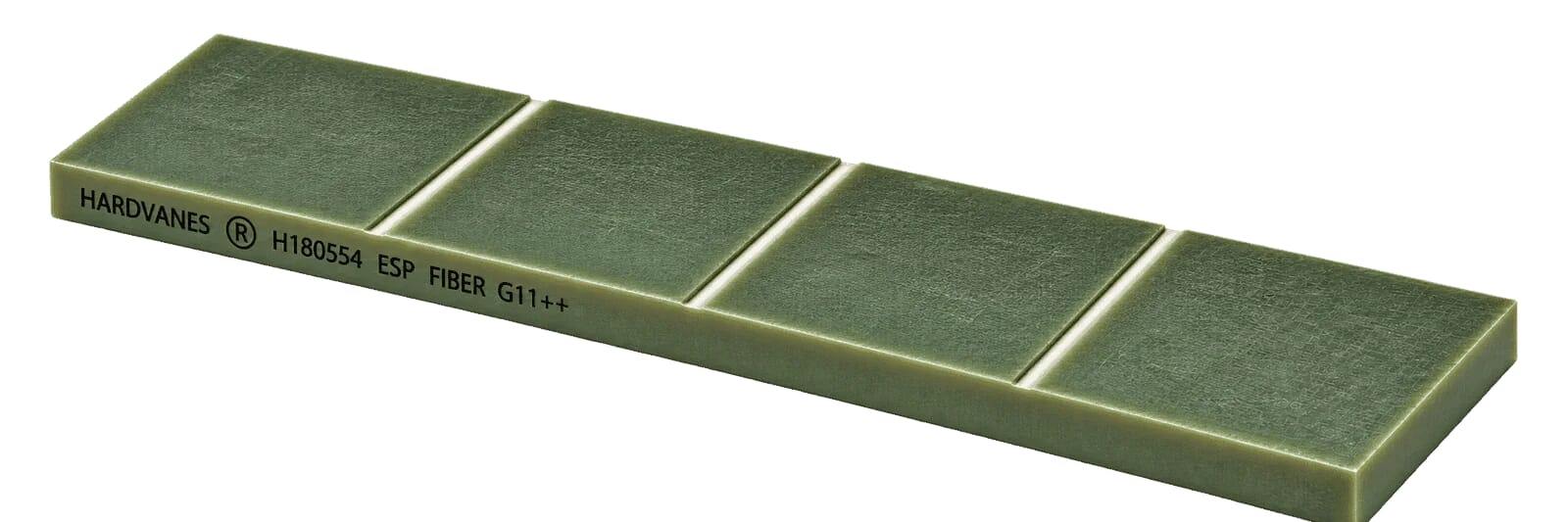
Every groove in its place
Grooves and edges
We check the face, position, orientation and number of grooves. The reference G11++ vane has three grooves and the Kevlar example has none; we don’t assume either configuration for other pumps.
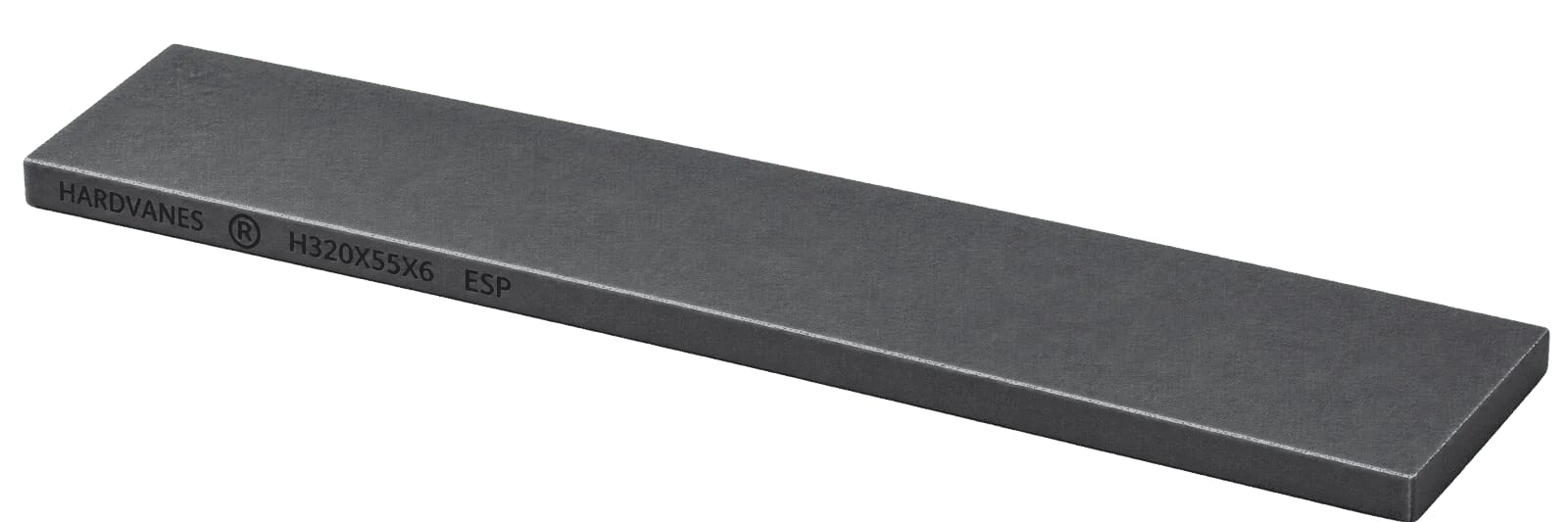
Length × width × thickness
Dimensions and wear
We check length, width and thickness at several points. A worn part may no longer match its nominal size, so we compare sample, drawing and manual before setting dimensions and tolerances.
The choice starts with your equipment
Material and lubrication
We must know whether the pump is dry-running or oil-lubricated. HARDVANES® EKVAC EVO+ carbon graphite, G11++ epoxy fibre and technical materials are assessed against the service conditions.
The details work too
Polishing and finish
We look at milling, fine machining, flatness, parallelism and edge finishing. High-gloss or mirror polishing is considered only when the material and the functional specification allow it.
Minimum manufacturing order: 4 units. Material, dimensions and compatibility subject to technical review.
Made in Spain.Made in Europe.
Machined in Barcelona
We manufacture and machine our custom vanes in Barcelona, and ship them from here to customers in 43 countries. Dimensions, bevels and finishes follow the reference and the conditions of each application.
German carbon graphite
For HARDVANES® EKVAC EVO+, we use German-origin carbon graphite specified for dry-running vacuum pump and compressor vanes.
Explore graphite technologyFrequently asked questionsabout custom vanes.
What customers usually ask us before requesting a quote. You’ll find more answers in our vacuum pump vane FAQ, our vane technology page and our tips for changing vanes. Or send us your dimensions.
What if I can’t find the vane for my vacuum pump?
First, check whether it’s in our vacuum pump vane catalog. If it isn’t, measure your old vane with a caliper (length, width and thickness), tell us whether the pump is dry-running or oil-lubricated and, if you know it, the equipment model. With that information we study the vane and prepare a proposal to make it to measure.
Do you make vanes for discontinued equipment or equipment of unknown origin?
Yes. We’ve made vanes for discontinued equipment, for machines whose manufacturer no longer makes them and for equipment with no part number or nameplate, even of unknown origin. We work from your old vane, its dimensions or a drawing.
What’s the minimum order?
The minimum manufacturing order is 4 units.
Which materials do you use for custom vacuum pump vanes?
Carbon graphite for compatible dry-running equipment, G11++ technical fibre and Kevlar Pharaontex 999. We also assess phenolic resins and other fibres. The material is chosen according to the pump’s design, its lubrication and its working conditions.
Why do I need to say whether the pump runs dry or with oil?
It’s required to verify material compatibility. A vane for a dry-running pump isn’t specified in the same way as one for an oil-lubricated pump.
My vane is worn. Can I still measure it?
Yes. Bear in mind that a worn vane may no longer match its nominal size: measure the thickness at several points and, if you have the original dimension, a drawing or the pump model, let us know. We check it before manufacturing. To know when it’s time to replace it, see how to check vane wear.
I don’t have the vane. Can I give you the rotor dimensions?
Yes. The length of the rotor slot is the vane’s length, the slot width is its thickness and the slot depth is its width. Also measure the rotor diameter, count the slots and tell us whether they’re radial or angled. This works for rotors with a shaft, with a hub, or short large-diameter rotors. We check the fit before manufacturing.
What’s the largest size you can make?
In carbon graphite we make vanes up to 400 mm long and 8 mm thick. In G11++ technical fibre and Kevlar, up to 800 mm long and 8 mm thick. Beyond those sizes, ask us: we look at each case individually.
Do you ship vanes outside Spain?
Yes. We’ve shipped vane kits to customers in 43 countries. Many machines that had run out of vanes are running normally today, and many customers reorder their vane sets.
Where are the vanes made?
We manufacture and machine our custom vanes in Barcelona. For HARDVANES® EKVAC EVO+, we use German-origin carbon graphite.
43 countries. Machines back at work. Customers who come back. Now, your vane.
Your size.Your material. Your vane.
Choose the dimensions, graphite or fibre grade, quantity and finish. We’ll prepare a proposal tailored to your vacuum pump or compressor, as we have for customers in 43 countries.
Don’t know the dimensions or the lubrication? We can start with the model and a photo of the nameplate. We’ll help you identify the spare part.